
By Oreoluwa Adebayo (Founder, WeCollect)
A few days ago, I came across a headline that hit me like a bag of onions at Mile 12 market:
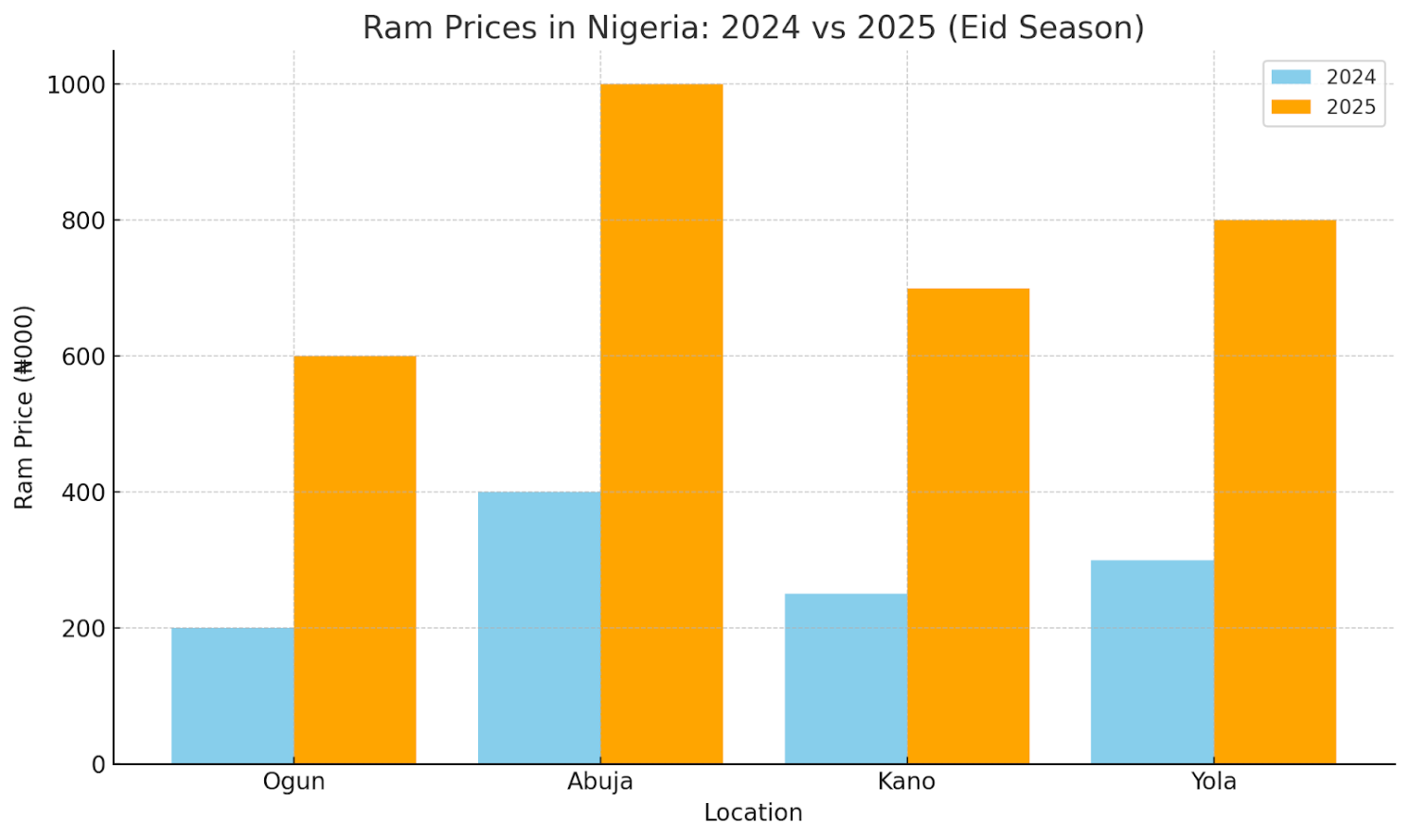
“Ram prices in Ogun State rise from ₦200K to ₦600K ahead of Eid”.
And I couldn’t help but think: Why are we surprised again?
We’ve seen this before. Year after year, festive seasons roll around, and markets explode with price hikes. We complain, post headlines, and move on. But no one’s asking the real question:
Why don’t we see it coming?
Here’s what that headline doesn’t tell you and why it matters.
With truckloads of rams flooding markets across the country, prices tripled compared to last year.
And it’s not just about festive demand. Economics 101 tells us that prices should fall when supply is high and demand is low.
But Nigeria rewrites the textbook.
Let’s be clear: what happened with ram prices isn’t just a livestock issue.
It’s the same issue we see when:
- Cement prices jump ₦1,000 overnight, and housing projects stall.
- Rice prices climb 20% in a month, and food programs scramble.
- Market research misses local conditions, and campaigns flop.
So what’s going on?
This is about how inflation creeps into everyday life, fueled by structural inefficiencies and blind spots in our decision-making.
Here’s what’s pushing prices up:
- Feed costs have surged. So has transport. By the time a ram reaches the market, the cost per head is already through the roof, long before the first buyer arrives.
- When maize, rice, and vegetable prices rise, everything tied to food, including livestock, follows. It’s all connected.
- The naira’s devaluation and fuel subsidy removal have driven up the cost of logistics, storage, and even market stall rentals.
- Banditry and climate disruptions have limited cross-border livestock flow. Supply tightens in some areas while others hoard stock, and sellers pass the cost on.
And that’s the real issue.
We’re not just reacting late, we’re reacting blindly. Government, media, NGOs, and businesses all make decisions without knowing what’s happening on the ground.
Sure, we have big data. The macroeconomic models. The policy memos.
However, the street-level truth, such as the cost of maize in Gboko this week or cement in Jalingo, is often invisible to the people who need it most.
And you can’t fix what you can’t see.
This structural data gap is not only inconvenient but also economically dangerous.
That’s why we built WeCollect Data OTG (On-the-Go), a field data service designed for anyone who needs fast, verifiable, hyperlocal data from across Nigeria. Delivered in 72 hours. No field agents to hire. No surprise, logistics costs. Just clear, useful insight.
Do you need to know:
- 🛒 Prices in remote markets?
- 📦 Product availability in underserved towns?
- 🗳️ Voter sentiment in pre-election LGAs?
- ⚠️ Asset pricing in conflict zones?
WeCollect agents are trained, geo-enabled, and ready. We’ve deployed for NGOs, marketing agencies, state governments, and logistics companies. Whether they say it or not, everyone needs real field data.
So let’s make this practical.
If you had access to verified field data from anywhere in Nigeria within 72 hours, what would you want to know?
- 🛍️ Consumer behavior in Tier 2 cities?
- 🏪 Retail presence of your product in rural kiosks?
- 📈 The real price of essentials outside Lagos or Abuja?
Drop your idea in the comments. I’ll pick a few and show you how quickly we can make that data real, no agents, no stress.
In the meantime, make a data request or schedule a quick call to learn more about how WeCollect works.